
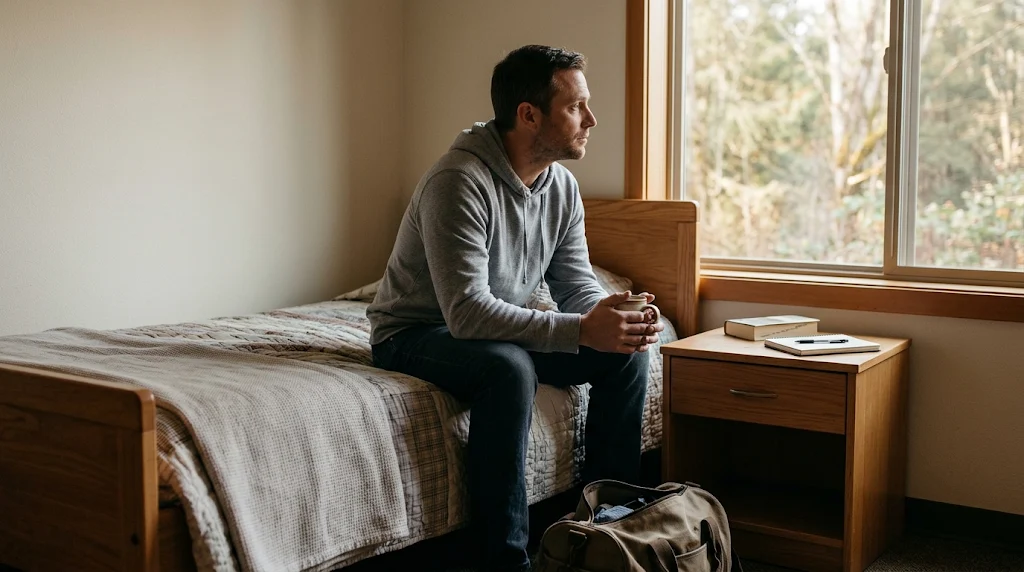
What Actually Happens in Your First Week of Rehab
The first week of rehab is mostly about three things: getting assessed, getting physically stable, and getting used to a structured routine. Most people spend day one on intake paperwork and a health check, the next few days managing withdrawal (if they need detox), and the rest of the week easing into group sessions, one-on-one counseling and a set daily schedule. It is usually less dramatic than people fear, and more tiring than they expect.
If you or someone you love is about to start treatment, the unknowns can feel bigger than the decision itself. This guide walks through what typically happens, day by day, so you can show up prepared instead of braced for the worst. Every program runs a little differently, so treat this as a realistic map, not a promise.
If you are in crisis right now, call or text 988 to reach the 988 Suicide & Crisis Lifeline, available 24/7. For confidential, free treatment referrals, the SAMHSA National Helpline is open at 1-800-662-4357.
Before Day One: The Call and the Pre-Admission Screen
Most first weeks actually start a few days earlier, with a phone call. An admissions coordinator usually asks about what substances are involved, how much and how often, any medical or mental health conditions, current medications, and insurance. It can feel personal, but it is how a program decides whether it is the right level of care for you, or whether you should be pointed somewhere else.
This is also your moment to ask questions. Useful ones include whether medical detox happens on-site, whether they offer medication for addiction treatment, what a typical day looks like, and what their phone and visitor rules are. If you are still comparing options, our broader Recovery & Treatment hub explains the different levels of care in plain language.
A practical packing tip: bring a week of comfortable clothes, a list of your medications and doctors, your ID and insurance card, and something low-tech that calms you, like a paperback or a journal. Many programs restrict items such as mouthwash with alcohol, aerosols or certain supplements, so ask for their list.
Planning your first week?
Find a center that answers your questions before day one
Northwind Wellness helps you find and connect with treatment centers, so you can ask about detox support, phone and visitor rules, and insurance before you arrive.
Day 1: Intake, Assessment and Settling In
Day one is mostly conversation and paperwork. Expect:
- A full assessment. Staff will ask detailed questions about your substance use history, physical health, mental health, sleep, family and work life. Many programs use the ASAM Criteria, a widely used framework for matching people to the right intensity of care.
- A medical check. Vital signs, a basic physical, and often a urine drug screen and blood work. This is about safety, not judgment.
- A bag search. Nearly every residential program checks belongings. It is routine, and it protects everyone in the house.
- Orientation. You will learn the house rules, meal times, and who to go to when you need something.
Many people say the hardest part of day one is not anything that happens, but the quiet moment after the door closes. Feeling relieved, scared and homesick in the same hour is normal.
Days 2–4: Detox and the Physical Adjustment
If your body has become dependent on alcohol, opioids, benzodiazepines or another substance, the first several days may focus on withdrawal management, usually called detox. How this feels depends heavily on the substance, how long you used, and your overall health.
A few honest points matter here:
- Withdrawal from alcohol and benzodiazepines can be medically dangerous. These should be managed by medical professionals, not tapered alone at home. The National Institute on Alcohol Abuse and Alcoholism is a good source on why.
- Medications can make withdrawal safer and more bearable. For opioid use disorder in particular, FDA-approved medications like buprenorphine, methadone and naltrexone are evidence-based options, according to the National Institute on Drug Abuse.
- Symptoms vary. Common ones include poor sleep, sweating, anxiety, irritability, nausea, aches and strong cravings. Most acute symptoms ease within days, though sleep and mood can take longer to settle.
If you want a closer look at what helps during this stretch, see our guide on how to cope with withdrawal symptoms during rehab.
During detox you are not expected to be a model participant. Rest, fluids, regular meals and showing up when you can are enough. Some people do not need detox at all and move straight into the daily schedule.
Days 4–7: Finding the Rhythm of a Structured Day
Once you are physically stable, the week shifts toward the actual work of treatment. A typical weekday might look like this:
| Time | What usually happens |
|---|---|
| Morning | Wake-up, breakfast, medication check, short community meeting or mindfulness |
| Late morning | Group therapy or a skills group (for example, coping with cravings) |
| Midday | Lunch and a short break |
| Afternoon | Individual counseling, education sessions, or specialty groups |
| Late afternoon | Exercise, outdoor time or a recreational activity |
| Evening | Dinner, a peer support meeting, free time, lights out |
The NIDA Principles of Drug Addiction Treatment note that effective treatment addresses the whole person, not just substance use. That is why your week may include sessions on sleep, nutrition, stress and relationships alongside counseling. Nutrition often gets overlooked, and our post on nutrition and wellness in addiction recovery explains why regular, nourishing meals matter so much early on.
Your first individual counseling sessions
In the first week, a counselor or therapist will usually work with you on a treatment plan: what you want to change, what has gotten in the way, and what support you will need after you leave. Common approaches include cognitive behavioral therapy (CBT) and motivational interviewing. If you also live with depression, anxiety, trauma or another mental health condition, this is when it should come up, since treating both together tends to work better.
Your first group sessions
Group can feel intimidating. You do not have to share your story on day four. Most people start by listening, and many later say group was the part of treatment that helped most, because it was the first place they felt understood.
Phones, Visitors and Family Contact
Policies vary widely, and it is one of the most common questions families ask. Many residential programs limit phone use during the first few days or the first week so people can settle in, then allow scheduled calls. Visiting is often limited at first and opened up after an initial period, frequently through a family day or family sessions.
If you are the loved one on the outside, that silence can be hard. Our guide to how to support a loved one in rehab covers what to say, what to send, and how to look after yourself while you wait.
How the First Week Usually Feels
People describe the first week in remarkably similar terms: tired, emotional, restless, and occasionally surprised by moments of relief or even laughter. It is common to want to leave around day three or four, when withdrawal, poor sleep and homesickness overlap. That urge usually passes. If it does not, talk to staff before making a decision. Leaving against medical advice during detox can carry real health risks.
It also helps to know that the first week is not the whole story. Rehab length varies, and our explainer on how long alcohol and drug rehab takes covers why some people do 30 days and others need longer or step down to outpatient care.
When to Get Help Right Away
Whether you are still deciding or already enrolled, seek immediate help if you notice:
- Confusion, hallucinations, seizures or a racing heart during withdrawal (call 911)
- Signs of an overdose, such as slowed breathing or unresponsiveness (call 911 and use naloxone if available)
- Thoughts of suicide or self-harm (call or text 988)
These are medical emergencies, not signs of failure.
Finding a Program That Fits
Northwind Wellness is a resource and referral directory, not a treatment provider. If you are ready to explore options, you can find a center that matches your needs, budget and level of care, or search the federal locator at FindTreatment.gov. Asking the questions above, before admission, is one of the best ways to make your own first week smoother.
Ready to take the next step, at your own pace?
Explore treatment centers across the country and connect with one that fits your needs, insurance and budget.
Find a CenterNeed to talk to someone now? Call or text 988 (988 Suicide & Crisis Lifeline), or call the SAMHSA National Helpline at 1-800-662-4357. Free, confidential, 24/7.
Frequently Asked Questions
What happens on the first day of rehab?
The first day usually includes an intake assessment, a medical check, a belongings search and orientation to the house rules and schedule. Most of the day is conversation and paperwork rather than intensive therapy.
Do you always go through detox in the first week of rehab?
No. Detox is only needed if your body is physically dependent on a substance. Some people go to a separate detox program first, some detox on-site in the first few days, and some skip it entirely.
Can I use my phone during the first week of rehab?
It depends on the program. Many residential centers limit phone use for the first few days or the first week, then allow scheduled calls. Ask about phone rules before you admit.
Can family visit during the first week?
Often not right away. Many programs wait until after an initial settling-in period, then offer visiting hours, family days or family therapy sessions.
Is it normal to want to leave rehab in the first week?
Yes. The urge to leave is common around days three to five, when withdrawal, poor sleep and homesickness overlap. Talk with staff first, especially during detox, since leaving early can carry health risks.
What should I pack for the first week of rehab?
Comfortable clothes for about a week, basic toiletries without alcohol, your ID and insurance card, a list of medications and doctors, and a book or journal. Check the program’s list of restricted items before you go.
Editorial note: This article is for general education and does not replace advice from a doctor or licensed treatment professional. Northwind Wellness is a resource and referral directory and does not provide treatment. Written by the Northwind Wellness Editorial Team. Last reviewed November 11, 2026.